
What to Do If Your Long-Term Disability Claim Is Denied in Toronto
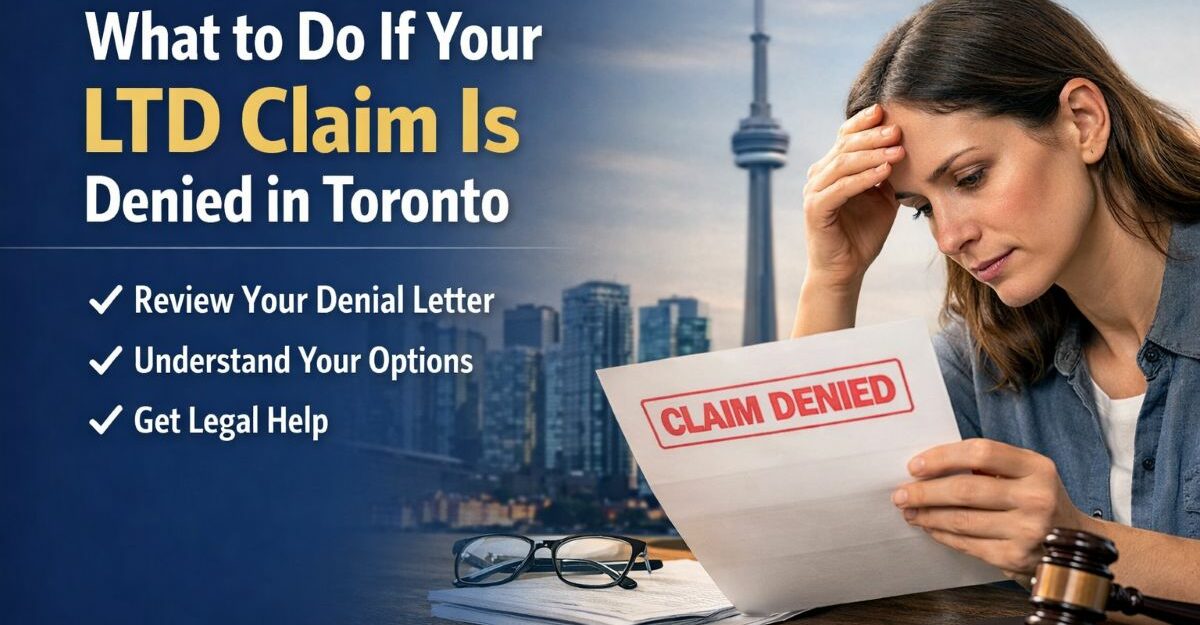
When a long-term disability (LTD) claim is denied, it can come as a shock. Many people assume that if their doctor supports their claim, disability benefits will continue. Unfortunately, disability insurance claims do not work that way.
Insurance companies frequently deny LTD claims based on policy interpretations, internal medical reviews, or technical requirements within the insurance contract.
If your long-term disability claim has been denied in Toronto, understanding the reason for the denial — and what steps to take next — can help protect your right to benefits.
Step 1: Carefully Review the Denial Letter
When an insurer denies or terminates long-term disability benefits, they must provide an explanation.
A denial letter typically outlines:
- The insurer’s interpretation of the policy
- The medical evidence they relied on
- Why they believe you do not meet the definition of disability
Many claimants are surprised to learn that LTD disputes are rarely about whether someone is genuinely ill or injured. Instead, they often involve how insurance companies interpret policy wording and evaluate medical evidence.
Step 2: Do Not Rush Into an Appeal
Many insurance companies encourage claimants to submit an internal appeal after a denial.
However, appealing a denial without understanding the legal issues involved can sometimes weaken a claim.
Insurance company appeals are still handled internally by the insurer. Submitting additional documents without a clear strategy may allow the insurer to strengthen its position later.
Before responding to a denial, it is important to understand:
- The exact definition of disability in your policy
- The medical evidence required to challenge the decision
- The legal deadlines for taking further action
Step 3: Understand the “Own Occupation” vs “Any Occupation” Definition
Many LTD claims in Toronto are denied or terminated after about two years of benefits.
This often happens when the policy definition of disability changes from:
Own occupation
Unable to perform the duties of your own job.
to
Any occupation
Unable to work in any suitable occupation based on education and experience.
Insurance companies frequently rely on this transition to argue that the claimant can perform some other type of work.
Step 4: Preserve Your Medical Evidence
Medical documentation plays a critical role in any long-term disability dispute.
Strong evidence may include:
- Updated reports from treating physicians
- Specialist opinions
- Treatment records
- Functional assessments documenting limitations
Medical evidence must address the policy’s legal definition of disability, not just the diagnosis itself.
This is why insurers often claim there is “insufficient medical evidence” even when the claimant continues to receive treatment.
Step 5: Be Careful With Surveillance or Return-to-Work Requests
Insurance companies sometimes conduct surveillance or encourage claimants to attempt a return to work after denying benefits.
These actions can create additional complications if they are not handled carefully.
For example, insurers may:
- Interpret limited daily activity as proof of work capacity
- Use surveillance footage taken out of context
- Rely on return-to-work attempts to justify terminating benefits
Surveillance has become increasingly common in disability claims.
Step 6: Seek Legal Advice Before Responding to the Insurer
If your long-term disability claim has been denied, getting legal advice early can help clarify your options.
A disability lawyer can review:
- The insurance policy
- The insurer’s reasons for denying benefits
- The medical evidence supporting disability
- The legal options available to challenge the decision
Understanding the legal framework early can prevent mistakes that may weaken a claim later.
Key Takeaway for Toronto Claimants
A long-term disability denial does not always mean the insurer’s decision is correct.
Many LTD disputes arise from policy interpretation, evidence standards, and insurer tactics — not simply medical disagreement.
About the Author

Sivan Tumarkin
Sivan Tumarkin is a Founding Partner of Samfiru Tumarkin LLP and Practice Leader for the firm's Long-term Disability & Personal Injury Law Group. His previous experience working for insurance companies has given him unique insight into the long-term disability claim denial and appeals process, allowing him to secure strong results for his clients.
More about Sivan TumarkinRelated Posts
How Long Do You Have to Challenge a Long-Term Disability Denial in Toronto?
Learn how long you have to challenge a long-term disability denial in Toronto, including limitation periods that can impact benefits.

State Farm Facing Discrimination Lawsuit, Allegedly Fired Staffer on LTD
The latest information on Sabrina Wiley's claim and comprehensive resources for non-unionized employees in Canada.

75-Year-Old, 28-Year-Old Dead After Head-On Crash North of London
Ontario Provincial Police are asking anyone with information on the incident, including dashcam footage, to contact them.